
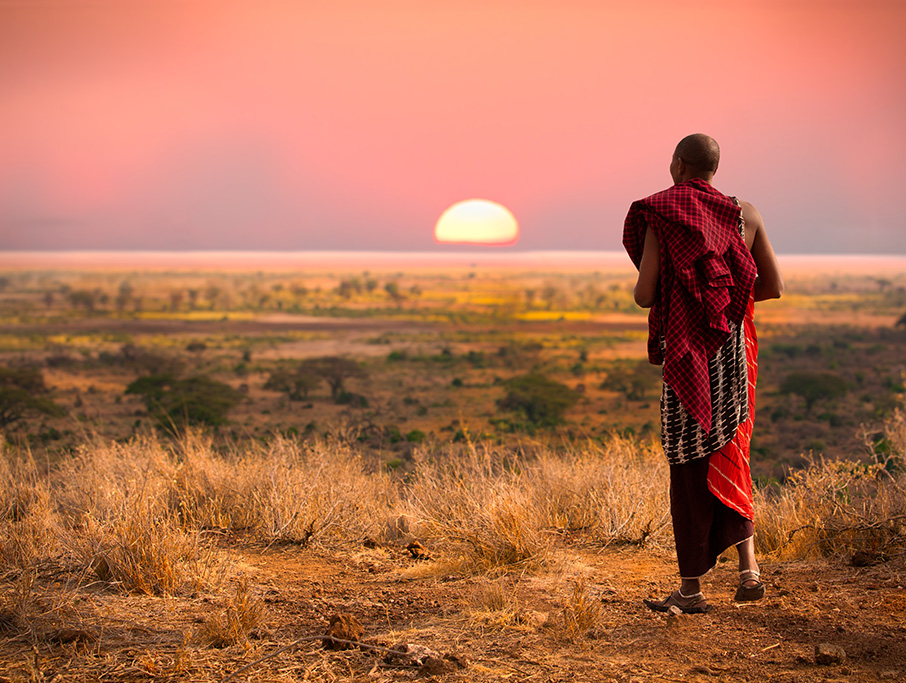

The Massai, one of Africa’s most emblematic tribes, primarily reside in Kenya and to a lesser extent in Tanzania. With an approximate population of half a million, the Maasai have managed to preserve much of their culture and traditions despite the increasing pressure of modernization. This semi-nomadic people have lived in harmony with nature for centuries, basing their economy on livestock and considering cattle as an essential measure of wealth and social status.
Massai society is structured around family and clan, guided by an age-set system that organizes social life and community responsibilities. Young Massai, known as “Morans,” undergo initiation rituals that prepare them for adulthood, teaching them the necessary skills to protect and care for their community. These rituals not only mark the transition to new stages of life but also serve to pass on the knowledge and wisdom of previous generations.
The Massai are also famous for their distinctive attire, composed of the “shúka,” a often red-colored cloth wrapped around the body, and their intricate jewelry and ornaments. These practices not only hold aesthetic value but also serve social and spiritual functions, communicating the status, identity, and beliefs of those who wear them.
In recent times, the Massai community faces numerous challenges, from the loss of their traditional lands due to the expansion of protected areas and agricultural development to the impact of climate change on their pastoral practices. Despite these challenges, the Massai continue to strive to preserve their way of life, seeking a balance between tradition and the demands of the modern world.
Through a deep respect for their natural environment and a strong sense of cultural identity, the Massai of Kenya offer a powerful example of resilience and adaptability, reminding us of the importance of preserving traditions as we confront a world in constant change.